






By Grant Winrich | Edited guest article | September 24, 2026
Autonomy, structure, confidence, and sustainable boundaries for entrepreneurs.
Editor’s note: Entrepreneurship can offer meaningful autonomy and flexibility, but it can also bring uncertainty, financial pressure, isolation, and responsibility. The goal is not to romanticize self-employment; it is to help business owners use autonomy intentionally while building the structure and support that protect well-being.
When Autonomy Becomes a Mental-Health Asset
For new business owners and would-be founders, the appeal of being the boss often collides with a real fear: trading a steady job for uncertain income and constant responsibility. Yet greater control over priorities, pace, schedule, and boundaries can make self-employment more psychologically sustainable for some people.
When expectations and routines are self-directed, entrepreneurs may be able to build work around periods of focus, family responsibilities, exercise, rest, and other needs that are harder to accommodate in rigid roles. That flexibility does not eliminate stress, but it can change the source and shape of it. With intention, autonomy can become one part of a broader mental-wellness strategy rather than simply another demand.

Build Money-and-Management Skills That Make Self-Employment Feel Safer
Autonomy feels more sustainable when it is paired with practical competence. Skills in budgeting, cash-flow planning, marketing, operations, and management can reduce avoidable uncertainty and help owners make decisions with greater confidence.
Formal education is one route, but it is not the only one. Business courses, mentoring, professional associations, financial-literacy programs, and targeted training can all strengthen the skills needed to decide where to invest time and money, how to position an offer, and how to manage day-to-day operations. For people who do pursue a degree or certificate, flexible online programs may make continued learning easier to combine with client work, income needs, and personal responsibilities.
Why Self-Employment Can Feel Better – and Why It Sometimes Does Not
Self-employment can support well-being because it increases control over how work is organized, not merely what work is performed. Owners can shape schedules, choose priorities, reduce some forms of workplace friction, and create routines that better match their energy and responsibilities.
That control may also strengthen motivation and fulfillment when the work reflects personal values, creativity, or a sense of purpose. Picture a freelancer who schedules calls in the afternoon while reserving mornings for focused work and exercise. The workload may still be substantial, but the week can feel more predictable and personally meaningful.
At the same time, autonomy has a cost: the owner often carries the uncertainty, decision burden, and financial risk. The healthiest version of entrepreneurship therefore combines freedom with structure, rather than treating freedom as the absence of limits.
Spot Imposter Feelings Early and Protect Your Confidence
Greater independence can sometimes amplify self-doubt. People commonly use the phrase “imposter syndrome” to describe persistent feelings that their competence is undeserved or that they may eventually be “found out,” even when their work and results suggest otherwise.
Warning signs can include dismissing accomplishments, overworking to prove worth, perfectionism, reluctance to share work, or disproportionate anxiety around evaluation. Helpful responses include naming the thought rather than treating it as fact, keeping a record of progress and positive feedback, setting realistic standards, and seeking perspective from trusted peers, mentors, coaches, or mental-health professionals when needed.
Mental Health FAQs for New and Growing Business Owners
Q: What if being my own boss actually makes my anxiety worse?
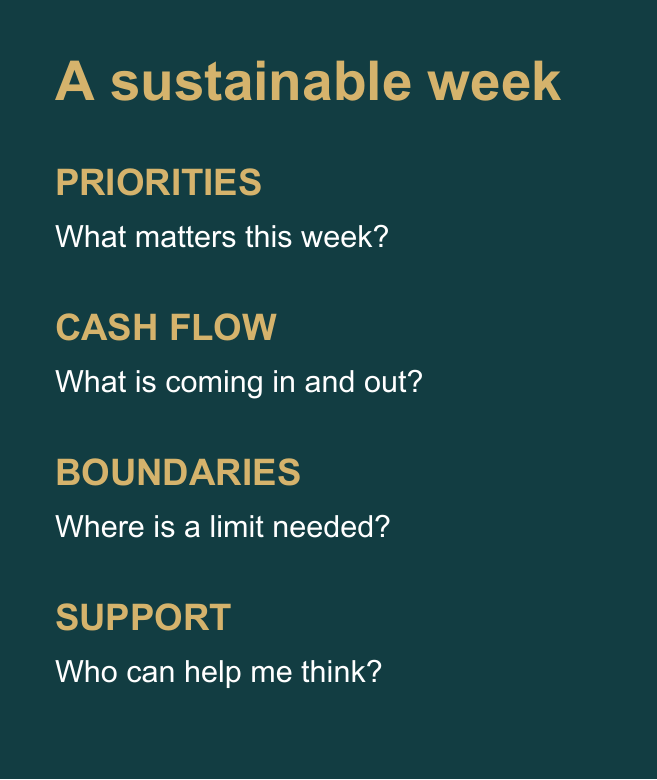
A: That can happen. Income uncertainty, responsibility, and constant decision-making can increase anxiety even when you value independence. Treat stress planning as seriously as financial planning: identify triggers, set weekly priorities, create decision rules, and build a support network. If anxiety is persistent, worsening, or interfering with daily functioning, consider speaking with a qualified mental-health professional.
Q: How do I balance ambition with real work-life boundaries?
A: Start with office hours you can realistically maintain. Protect them with calendar blocks, communication expectations, and a consistent “shutdown” routine. Boundaries are not the opposite of ambition; they can make sustained performance more realistic.
Q: When should I take a day off if everything depends on me?
A: Ideally, before you are depleted. Schedule time away as deliberately as a client commitment. A simple minimum-operations checklist, backup contact, and emergency plan can make genuine disconnection easier.
Q: Can I reduce self-employment stress without immediately earning more money?
A: Often, yes. Reducing uncertainty can matter even before revenue changes. A basic cash-flow forecast, automated bills, clearer pricing, a small reserve when feasible, and a weekly financial review can make surprises feel more manageable.
Q: How can I rebuild confidence after a bad month?
A: Separate outcomes from identity. Review controllable actions – outreach, proposals, follow-ups, service quality, learning, and relationship-building – and choose one measurable goal for the next week. Tracking small wins can help rebuild momentum without pretending that setbacks do not matter.
One Confident Step Toward a Healthier Self-Boss Life
Being your own boss can relieve some frustrations associated with rigid schedules and limited control, but it can also introduce uncertainty, isolation, and pressure to perform. A steadier approach is to pair autonomy with structure and to treat mental health as part of the business plan rather than as something separate from it.
Sustainable entrepreneurship is less about working without limits and more about designing limits deliberately: clear priorities, financial visibility, realistic expectations, recovery time, trusted relationships, and support when needed. When those pieces work together, independence can become not only a business arrangement, but a healthier and more intentional way of working.
Practical Takeaways
- Design your schedule around both business priorities and recovery needs.
- Use a weekly financial review to reduce uncertainty and avoid carrying every decision mentally.
- Create office hours and a repeatable shutdown routine.
- Track evidence of progress instead of relying only on how confident you feel on a difficult day.
- Build a support network that may include peers, mentors, financial professionals, coaches, and mental-health professionals.
- Seek professional help when stress, anxiety, low mood, sleep disruption, or other symptoms become persistent or interfere with functioning.
Important Note
This article is for educational and informational purposes and is not a substitute for individualized medical, mental-health, legal, financial, or business advice. If you are experiencing a mental-health crisis or are concerned about your safety, seek immediate local emergency or crisis support.
Editorial context and sources
Entrepreneurship does not guarantee better mental health. WHO identifies low control, excessive workloads and job insecurity as workplace risks. Its guidance does not establish self-employment as treatment. The practical routines in this guest article are suggestions, not a tested treatment program.
Explore ASBI support
Explore our services or request an appointment to discuss practical business planning and sustainable working habits.
- World Health Organization mental health at work
- SBA resources for managing a business
- ASBI services
- Request an appointment
- ASBI News
- Subscribe to ASBI articles via RSS
RSS subscriptions use your preferred feed reader; no email enrollment is implied. Sources checked September 24, 2026. Original illustrations created for ASBI.

0 Comments